Brooklyn Park Frozen Pipe & Emergency Plumbing Guide
A practical Brooklyn Park guide for frozen pipes, burst-pipe response, sump and water-heater triage, emergency cost expectations, and renter-safe documentation.
Use this guide before the call
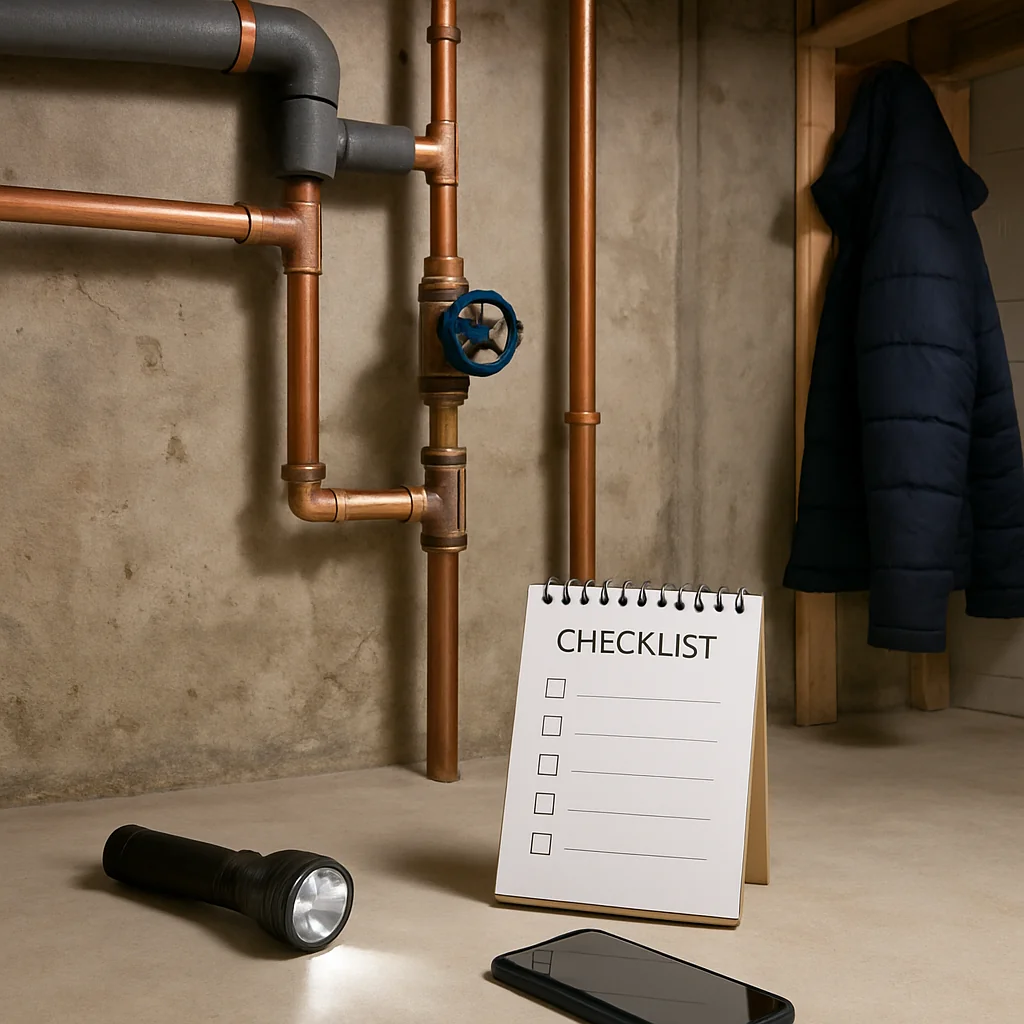
Brooklyn Park plumbing emergencies are often seasonal: frozen pipes in winter, sump pump overload during spring thaw and heavy rain, and water heater trouble when incoming water is coldest. The right first steps protect the house, and the right notes make the service call more productive.
Download homeowner checklist PDF Download renter checklist PDF
First steps by emergency type
- Burst pipe or active leak: shut off main water first, then open faucets to drain pressure. Move belongings away from water.
- Sewer backup: stop using water, keep people and pets out of the area, and call. Do not run laundry, dishwasher, showers, or toilets.
- Frozen pipe with no burst: open the affected faucet. Use gentle heat only on accessible pipe. Never use an open flame.
- Sump pump failure: check power only if the area is safe and dry. Do not reach into unsafe water or handle electrical equipment while standing in water.
- No hot water: note whether the tank is gas or electric, whether other gas appliances work, and whether the tank is leaking.
Where to find the main water shutoff
In many Brooklyn Park homes, the main shutoff is near the water meter in the basement, often on the wall facing the street. It may be a round gate valve or a lever-style ball valve. For a lever valve, turn it a quarter-turn until the handle is perpendicular to the pipe. For a round valve, turn clockwise until snug. If the valve will not move, do not force it hard enough to break it; call and explain that the shutoff may be seized.
Information that helps the plumber estimate
Have these notes ready when possible:
- Which fixture or area is affected: kitchen, bath, laundry, basement, water heater, sump pit, main drain, or exterior line.
- Whether the issue is no water, no hot water, active leak, slow drain, sewer backup, frozen pipe, or pump running nonstop.
- When it started and whether recent cold weather, thaw, rain, laundry, shower use, or toilet use triggered it.
- Photos of the shutoff valve, water meter, leaking pipe, sump pit, discharge line, water heater data plate, or backup area.
- Home age, visible pipe material, and any prior sewer, sump, or water heater work.
- Whether water is still flowing and whether you successfully shut it off.
These details help decide urgency, likely parts, whether cleanup or mitigation may be needed, and whether the first visit is likely diagnosis-only or repair-ready.
Frozen pipe prevention and thawing
Frozen pipes are most common on exterior walls, garage-adjacent runs, unheated basement corners, crawlspaces, and under-sink cabinets. During severe cold, open cabinet doors, keep the home heated, and let a vulnerable faucet drip lightly if a known line has frozen before. If a pipe is already frozen, open the faucet and warm the pipe slowly with a hair dryer, heating pad, or space heater aimed safely at the area. If the pipe is hidden in a wall or no flow returns within an hour, call.
For a more detailed thawing process, see How to Thaw Frozen Pipes Safely.
Emergency plumbing cost expectations
Actual pricing depends on access, time of day, material, damage, and whether the repair needs parts, excavation, cleanup, or follow-up work. These categories are useful for triage, not a quote.
- Diagnostic or emergency dispatch: usually a quoted service-call or diagnostic charge before arrival.
- Small fixture leak: often lower cost if shutoff valves work and parts are standard.
- Burst pipe repair: higher when access is behind walls, ceilings, or finished basements.
- Sewer backup: cost depends on whether it is a local clog, mainline blockage, root intrusion, or damaged sewer lateral.
- Sump pump replacement: varies by pump size, check valve, discharge condition, and battery backup needs.
- Water heater replacement: depends on tank size, venting, code updates, pan/drain needs, and access.
Water heater and sump notes
For water heaters, photograph the data plate and note whether the unit is gas or electric, tank or tankless, leaking or simply not heating, and whether hot water is lukewarm or fully cold. For sump pumps, note whether the pump runs nonstop, will not run, cycles rapidly, or cannot discharge outside. Brooklyn Park spring thaw can expose weak pumps and frozen discharge lines quickly.
Renter checklist
Renters should document the problem and notify the landlord or property manager quickly. Take photos or video, write down when the issue started, list affected fixtures, and say whether water is active, contained, or shut off. Use fixture shutoff valves only when accessible and safe. Do not open walls, disassemble plumbing, use harsh chemicals, thaw hidden pipes, or handle electrical equipment near water.
Need a Brooklyn Park plumber? (763) 309-6542. Phone is fastest for active leaks, backups, frozen pipes, and sump emergencies.